When you’re new to search engine optimization (SEO), the first question is rarely “where do I start?” It’s “how do I actually learn this?!”
Two answers come up most often: read a book or take a course. Both are legitimate paths. Both have real trade-offs. The right choice depends on how you learn, how much time you have, and what you’re trying to accomplish.
The breakdown below covers the strengths and limitations of each, so you can pick the one that works best for you.
What Books Do Well
Books are built for people who want to understand why, not just what.
The best SEO book for beginners will walk you through the reasoning behind the strategy. You don’t just get a list of tactics. You get an explanation of how search engines think, what they’re looking for, and why certain approaches hold up over time.
That depth matters for beginners. SEO has a lot of moving parts. A book gives you the foundation to understand those parts before you try to put any of them into practice. Without that foundation, tactics feel random because you don’t know what they’re connected to.
Books are also self-paced. You can read a chapter, set it down, think it over, and come back. There’s no instructor moving on before you’re ready. No pressure to keep up with a schedule. For learners who need time to let new ideas settle, that flexibility is genuinely valuable.
The best SEO books cover core ideas that stay relevant regardless of Google’s updates. How search engines decide what to rank, why content quality matters, and how links build trust are concepts that don’t shift much from year to year. Understanding those ideas gives you something durable to build on.
Cost is another factor. Most books are under $20. Finding a solid book to learn SEO doesn’t require a big budget. And books written for business owners tend to be more practical than the ones written for marketing professionals.
What Courses Do Well
Courses are built for people who learn by watching and doing.
A well-structured course shows you the process in real time. You see someone open a tool, check a website, or walk through a setup step by step. That hands-on visual makes abstract ideas easier to grasp. For beginners who struggle to picture what SEO actually looks like in practice, watching someone do it can fill that gap faster than reading about it.
Courses also give you a built-in path. The topics are already organized into modules. You don’t have to decide what to study next. You move through the material in order, which removes a common beginner problem: not knowing what comes after what.
Some courses include Q&A access, community forums, or direct feedback from an instructor. That interaction is useful when you hit a wall and need a specific answer rather than another page of search results.
One more advantage is currency. Some course creators update their content when SEO changes in a meaningful way. A course on a platform that refreshes its material can stay more current than a book that was printed two years ago. Courses also range from short free playlists to multi-week paid programs, so you can find something that fits your schedule and how far you want to go before committing to something longer.
Where Both Have Limits
No learning format is perfect. Understanding the limits of each helps you set realistic expectations.
Books go out of date. Google regularly updates how it ranks pages, and some tactics that worked well three years ago are less effective now. A book may still be strong on core concepts, but specific advice about tools or settings should be cross-checked against current sources before you apply it.
Courses have a different problem. Many are expensive, and the price doesn’t always reflect the depth. A course priced at $300 or $400 can cover the same ground as a $20 book, just spread across more videos. Some courses also spend more time on motivation than on practical instruction. You can finish feeling ready without actually knowing what to do next.
There’s also a depth gap that shows up in a lot of video-based learning. Courses often show you what to do without explaining why it works. That’s manageable at the start, but it becomes a problem later when something doesn’t go as expected, and you don’t have the background to work through it.
Both formats require you to take what you’ve learned and apply it in a real-world setting. Reading and watching will only get you so far.
Choose Based on How You Learn
Your learning style matters more than any general recommendation about which format is better.
Think about how you’ve learned new skills before. Did you pick up a book and work through it? Or did you search for a tutorial and watch someone demonstrate? Neither answer is wrong. They just point toward different formats.
People who absorb information well through reading tend to get more from books. People who need to see a process in action tend to do better with video. Both can learn SEO effectively. They just get there through different paths.
Budget is a real factor too. A book is a low-risk starting point. A course requires a larger investment before you know whether the format suits how you learn. Starting with a book, getting your footing, and adding a course later is a reasonable approach for most beginners.
Time is also worth thinking about. A book you can read for 20 minutes a day fits around most schedules. A course that expects you to block off two hours per module is a different kind of commitment. Be honest about what’s realistic before you sign up for something.
One thing to avoid: jumping between five resources at the same time. Pick one, finish it, and apply it. Start with one resource. Work through it completely. Apply what you learn to a real project, a real website, or even a single page. Then look for what comes next. This will take you further than any specific book or course on its own.
Bouncing between multiple books and courses at once leads to confusion, not progress.
Start with a Free SEO Book for Beginners
For beginners who want a strong foundation without feeling overwhelmed, starting with a focused book tends to work well. It builds the mental model you’ll need before course material makes full sense. Without that model, courses can feel like a lot of steps without a clear direction.
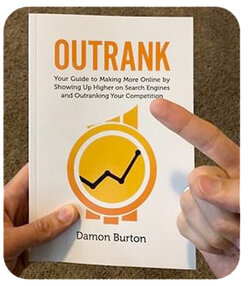
“Outrank” was written for business owners starting from zero. It covers how search engines work, what actually influences rankings, and how to approach SEO without getting buried in technical details. Pair it with this SEO course after you’ve finished, and that course will land faster because the foundation is already in place.
Either path can work. Pick one, see it through, and put what you learn into practice.