Strong keywords aren’t enough. You can use the right words and still not rank.
The problem usually comes back to one thing: the content doesn’t match what the searcher actually wanted. That gap between what you published and what someone came to find is called a search intent mismatch, and it’s one of the most common reasons pages underperform.
Understanding intent isn’t a technical concept. It’s a question of fit. Does your page give people what they came to find? The answer matters more than your keywords.
What Search Intent Actually Is
Every search has a purpose behind it. Someone who types “how to fix a leaky faucet” wants instructions. Someone who types “plumber near me” wants to hire someone. Same general topic, completely different intent.
Search intent is simply what someone is trying to do when they search. Are they looking to learn something? Find a specific site? Compare options before buying? Or buy right now?
Google’s job is to match each search with the content that best fits that purpose. When your page fits, Google rewards you. When it doesn’t, Google moves something else ahead of you, even if you’ve done everything else right.
This is why two pages can target the same keyword and get very different results. The one that matches what searchers actually want tends to win. Keyword placement, content length, and trust indicators all matter, but none of them overcome a fundamental mismatch in intent.
A mismatch doesn’t have to be obvious. Your page can be well-written, well-structured, and full of useful information and still be the wrong answer for a particular search. That’s what makes intent easy to miss and expensive to ignore.
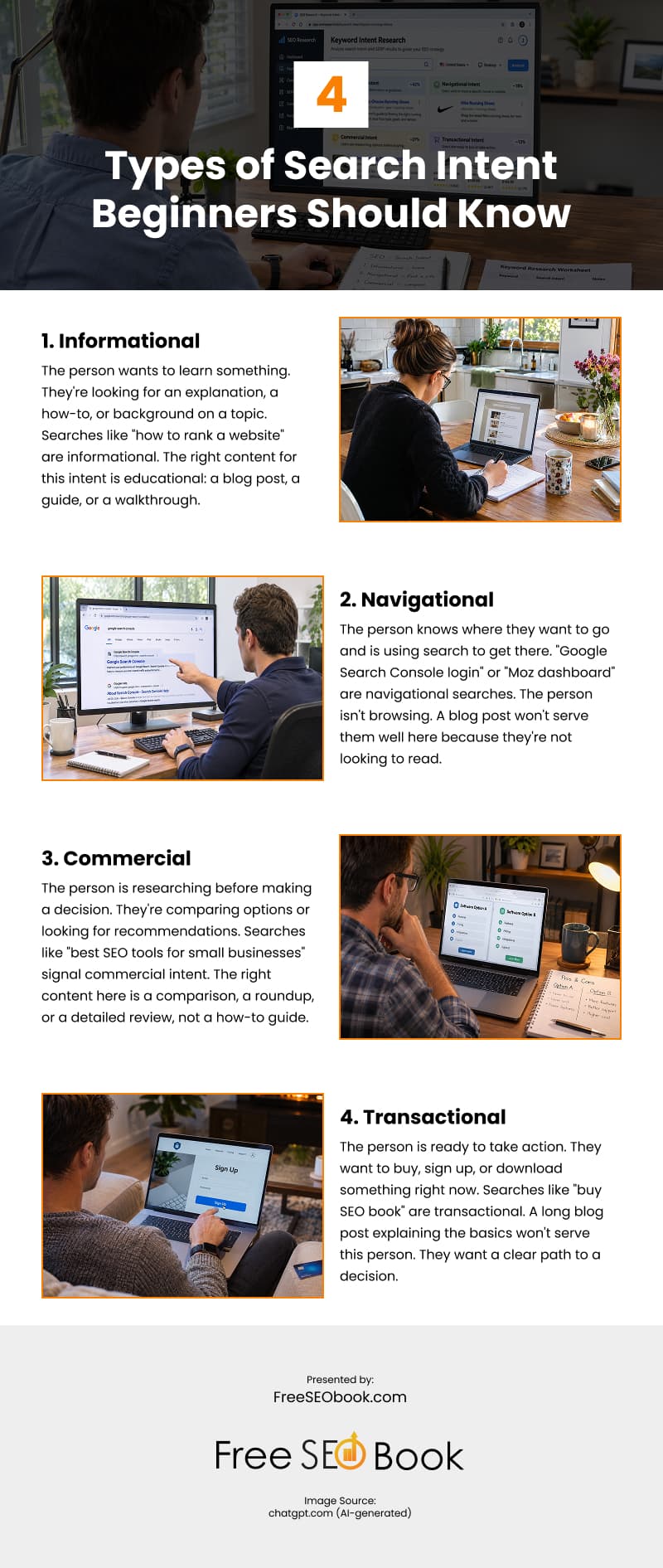
The 4 Types of Search Intent
Most searches fall into one of four categories. Knowing them helps you choose the right kind of content before you start writing.
1. Informational
The person wants to learn something. They’re looking for an explanation, a how-to, or background on a topic. Searches like “how does search engine optimization (SEO) work” or “how to rank a website” are informational. A free SEO tutorial falls here too, because the searcher wants to gain knowledge, not make a purchase. The right content for this intent is educational: a blog post, a guide, or a walkthrough.
2. Navigational
The person knows where they want to go and is using search to get there. “Google Search Console login” or “Moz dashboard” are navigational searches. The person isn’t browsing. They have a destination in mind. A blog post won’t serve them well here because they’re not looking to read.
3. Commercial
The person is researching before making a decision. They’re comparing options or looking for recommendations. Searches like “best SEO tools for small businesses” signal commercial intent. The right content here is a comparison, a roundup, or a detailed review, not a how-to guide.
4. Transactional
The person is ready to take action. They want to buy, sign up, or download something right now. Searches like “buy SEO book” or “sign up for SEO course” are transactional. A long blog post explaining the basics won’t serve this person. They want a clear path to a decision.
Most beginner SEO mistakes happen because the content type doesn’t match the intent type. A sales page targeting an informational keyword, or a basic explainer targeting a commercial keyword, will struggle regardless of how well written they are.
What Happens When Intent Doesn’t Match
When your content doesn’t match what someone searched for, they leave.
They clicked expecting one thing and found another. That departure signals something to Google. A page that consistently fails to keep people around signals to Google that the content isn’t the right fit for that search.
Over time, Google adjusts. Pages that satisfy searchers tend to move up. Pages that lose people quickly tend to slide, even if they were ranking before.
The frustrating part is that intent mismatches can sit undetected for months. The page is live in Google’s results. It may even show up when someone searches. But it never quite climbs, because Google can tell when a page isn’t delivering what searchers want.
The problem is also easy to overlook because everything can look right on the surface. The keyword is there. The page is live. But a person searching for a beginner’s guide who lands on a product page, or a person ready to buy who lands on a long tutorial, neither one gets what they came for. Both leave.
You don’t need to study data to recognize this pattern. You just need to think about the person typing the search and ask whether your page genuinely serves them.
How to Match Intent Before You Publish
The simplest way to check intent is to search the keyword yourself.
Look at the first page of results. Are they blog posts? Product pages? Comparison guides? Videos? The type of content Google shows tells you what kind of content Google believes fits that search. Follow that lead before you decide what format your page should take. This step alone can save you from publishing something that never had a real chance.
Pay attention to the angle, too. Not just what type of content is ranking, but what those pages are actually about. A search for “SEO tips” might surface beginner guides rather than advanced strategies. That tells you who is searching and what level of depth they’re looking for.
Look at how the keyword itself is phrased. Questions usually point toward informational intent. Short, action-oriented phrases often suggest a transactional tone. The wording gives you a clue before you even look at the results.
Then match both things: the format and the angle. A page that’s the right format but the wrong angle still misses. Someone searching “SEO tips for beginners” and landing on an expert-level breakdown is still going to leave.
Getting this right before you write saves time and protects the effort you put into the page. Rewriting a page to fix intent is harder than writing it right the first time.
Intent Is the Foundation, Not an Afterthought
Keywords are tools. Intent is direction. One without the other won’t get you far.
The businesses that rank consistently aren’t just using the right words. They’re creating content that actually delivers on what the searcher came to find. That fit is what earns a ranking and keeps it.
Search intent is one of the most practical things a beginner can get right early. You don’t need advanced tools. You don’t need a big budget. You need to understand who is searching, what they want, and whether your page delivers it.
That thinking applies across every piece of content you create. It makes keyword research more useful, makes your writing more focused, and makes your pages more likely to rank and stay ranked. It’s also the kind of thinking that separates people who understand SEO from people who are just following steps.
Understanding intent is where real SEO knowledge begins.
Infographic