The debate between YouTube and books for learning search engine optimization (SEO) is really a question of what kind of learner you are and what you’re trying to accomplish. Both formats have genuine strengths. Both also have real limitations that beginners rarely hear about before they’ve already wasted a few weeks on the wrong one.
The honest answer is that YouTube and SEO books serve different purposes. Understanding what each does well, and where each falls short, makes it much easier to choose the right starting point for where you are right now.
What YouTube Does Well
YouTube is hard to beat for visual, on-demand learning. You can search a specific SEO question, find a tutorial in minutes, and watch someone walk through exactly what you need to see. For beginners who learn by watching rather than reading, that’s a real advantage.
The platform is also free and frequently updated. SEO shifts as Google updates its algorithm, and YouTube creators often publish videos within days of a major change. That kind of responsiveness is something a printed book simply can’t match.
YouTube also gives you access to a wide range of voices. You can watch how different practitioners approach the same problem, compare strategies, and develop a sense of which approaches resonate with how you think. For tasks like setting up Google Search Console, navigating an SEO plugin, or walking through a site audit, step-by-step video walkthroughs often beat written explanations.
The format lowers the barrier to starting, too. There’s nothing to purchase, no structured path required, and no commitment beyond the length of a video. You can pick up a concept in 10 minutes and try applying it the same day.
Where YouTube Falls Short for Beginners
The same qualities that make YouTube accessible are what make it unreliable as a primary learning tool for someone just starting out.
There’s no quality control. Anyone can publish an SEO tutorial on YouTube, and the videos with the most views aren’t necessarily the ones with the most accurate information. A beginner has no baseline to judge which creators actually know what they’re talking about, so incorrect advice can be absorbed and acted on before anyone realizes it’s wrong.
The format also encourages fragmented learning. You watch a video on keyword research, then one on backlinks, then one on meta tags. Each covers its topic in isolation without connecting the pieces. You end up with a collection of tactics and no mental model for how they fit together. That gap usually doesn’t become obvious until you try to build an actual SEO strategy and realize you don’t know where to begin.
There’s also a passive learning trap that’s worth naming directly. Watching tutorials feels productive. Retention without application, though, is low. It’s entirely possible to spend hours on YouTube feeling like you’re learning SEO and still not be able to explain why a page ranks, or what to do differently when it doesn’t.
What an SEO Book Gives You That YouTube Can’t
A well-written SEO book gives you something no YouTube playlist can: a structured argument for why SEO works the way it does. The strongest ones don’t just show you what to do. They explain the reasoning behind it in a way that helps you make good decisions in situations the book never directly covered.
That foundational understanding is what separates beginners who plateau after their first few wins from those who keep improving. When you understand why Google values certain signals, you can adapt when the algorithm shifts rather than scrambling to figure out what happened.
Books also require focused, linear engagement. You work through a concept completely before moving to the next one. That’s a different kind of learning from watching videos. For many people, it produces much stronger retention, partly because there’s no autoplay pulling you to a different topic before the current one has settled.
A credible SEO book is also authored and edited for accuracy in a way that a YouTube channel isn’t. An author’s reputation is attached to the book in a lasting way. That accountability tends to produce more careful, considered content than the volume-based incentives that drive YouTube publishing.
The Best Approach Is to Use Both
YouTube and books aren’t competing options. They’re complementary tools that work well together once you understand what each one is for.
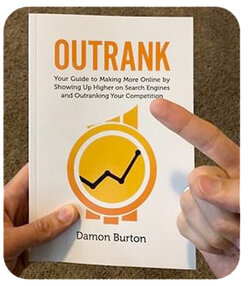
Start with an SEO book for beginners to build your foundation. Work through it systematically, cover to cover if possible. Let it give you the “why” behind SEO before you go searching for the “how.” Once you have that mental model in place, everything you encounter on YouTube becomes easier to evaluate. You know which advice fits your situation, which to adapt, and which to ignore.
Then use YouTube for the operational details. When you need to know how to configure a specific plugin, run a crawl, or see what a particular report looks like in practice, a video tutorial is often the right format. YouTube is also useful for staying current on updates once you have a foundational understanding to filter that information through.
The combination works because books give you the framework, and YouTube fills in the gaps the framework points you to. Without the framework, YouTube gives you pieces with no place to put them. Want to go even further? You can try an SEO course to advance your knowledge even further.
How to Find Books to Learn SEO
The quality of SEO books varies widely, and not all of them are built for beginners. The best book to learn SEO for someone without a technical background has three qualities:
- It explains the reasoning behind tactics rather than just listing them.
- It’s written for business owners and generalists rather than developers and agency marketers.
- It focuses on strategies that hold up over time rather than workarounds tied to a specific algorithm moment.
Watch out for books that are jargon-heavy without defining their terms, structured more like a reference manual than a readable argument, or dense with screenshots of tools that may have since changed their interface. Those books have their place, but they’re not where most beginners should start.
What works is a book that reads the way a knowledgeable friend would explain SEO over coffee. Direct, practical, honest about what’s hard, and built around concepts that still apply whether you’re reading it today or 18 months from now.